
So, You've Entered the Vault...
Welcome, collector. You've made it past the outer defenses. Inside these walls lie the secrets serious collectors guard closely—the knowledge that separates casual readers from true archivists. How to decode CGC labels. What makes a 9.8 worth ten times a 9.6. Consider this your map to the treasure. The comic ages that built the industry. The grading process that determines value. The terminology that unlocks insider conversations. Everything you need is here—protected, preserved, and ready to be discovered.
The Vault is open. What will you take with you?
Beginner’s Guide
Start your collecting journey the right way. Whether you’re chasing first appearances or nostalgic covers, here’s how to collect smart.
Buying Tips — Things to Check
Before you buy, look closer:
- · Condition counts. Check corners, spine, and gloss — even a tiny crease can drop value.
- · Know the grade. CGC 9.4 and above = Near Mint; lower grades may still hold historical value.
- · Spot the label. Blue (Universal), Yellow (Signature), Green (Qualified), Purple (Restored).
- · Beware of reprints. Confirm issue number, year, and publisher to ensure authenticity.
- · Preserve instantly. Use acid-free sleeves and boards the moment you own it.
Trusted Places to Buy
- · Start with reputable dealers and certified sellers — not random marketplaces.
- · If you’re in India, buy from sources that clearly mention CGC certification and show label
photos. - · When in doubt, reach out — collectors are a friendly community that loves helping
newcomers.
CGC Labels
Blue Label
Universal Grade: Standard graded comics; authentic and unrestored.
Yellow Label
Signature Series: Signed by creators in CGC’s presence; authenticated and sealed.
Green Label
A comic with a minor defect (like a missing page or unwitnessed signature).
Purple Label
Restored: Professionally touched up to fix damage; noted on the label.
Pro Tip: Blue and Yellow labels are the collectors’ favorites — Clean, Original, and Verifiable.
Grading Process
Grading turns condition into confidence. Here’s how CGC does it:
Result: a trusted grade, recognized by collectors everywhere.
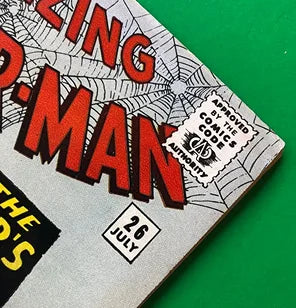
Your comic is received at CGC and logged into their system. A certification number is assigned, and the book is photographed. You'll get email updates as it progresses.
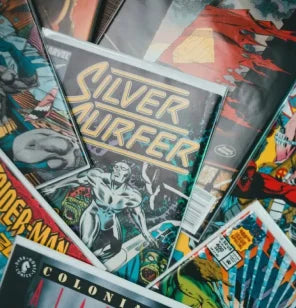
Each collectible gets a review to confirm its description matches the submitter's info. A unique ID and barcode track it during grading, keeping graders unaware of the submitter's identity.
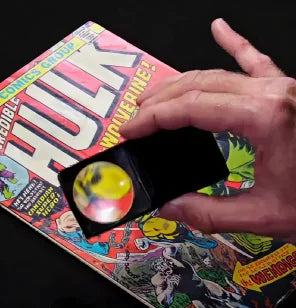
Mutiple Professional graders evaluate your comic using CGC's 10-point scale, assessing cover, spine, page quality, and defects. They reach a consensus on the final grade without knowing others' assessments.
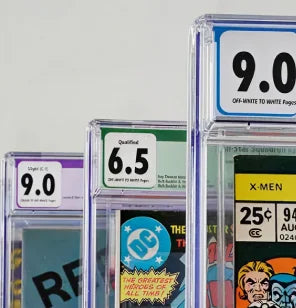
A final screening checks for conservation work. Based on findings, your comic gets a label: Blue (Universal), Purple (Restored), Yellow (Signature), or Green (Qualified).
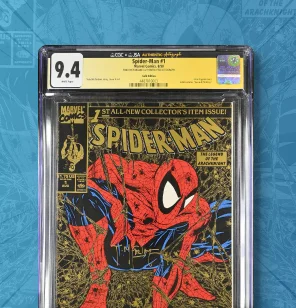
Your comic is sealed in a tamper-evident case. The grade label is attached, and the case is welded shut to protect against UV damage and moisture.
| Grade | Common Abbreviation | What it means |
|---|---|---|
| 10.0 | GM (Gem Mint) | Perfect - virtually impossible |
| 9.9 | MT (Mint) | Nearly perfect - extremely rare |
| 9.8 | NM/M (Near Mint/Mint) | Collector gold standard |
| 9.6 | NM+ (Near Mint+) | Exceptional copy |
| 9.4 | NM (Near Mint) | Very nice, minor flaws |
| 9.2 | NM- (Near Mint-) | Nice copy, slight wear |
| 9.0 | VF/NM (Very Fine/Near Mint) | Above average |
| 8.5 | VF+ (Very Fine+) | Nice reading copy |
| 8.0 | VF (Very Fine) | Average vintage condition |
| 7.5 | VF- (Very Fine-) | Visible wear but solid |
| 7.0 | FN/VF (Fine/Very Fine) | Moderate wear |
| 6.0-6.5 | FN (Fine) | Average vintage |
| 5.0-5.5 | VG/FN (Very Good/Fine) | Below average |
| 4.0-4.5 | VG (Very Good) | Significant wear |
| 3.0-3.5 | GD/VG (Good/Very Good) | Heavy wear |
| 2.0-2.5 | GD (Good) | Complete but worn |
| 1.0-1.8 | FD/GD (Fair/Good) | Heavy damage |
| 0.5 | PR (Poor) | Barely complete |
Comics Ages
Comics are history told in panels. Here’s how collectors define the eras:
Golden Age
(1938–1955)
The birth of superheroes — Superman, Batman, Wonder Woman.
Silver Age
(1956–1970)
The Marvel revolution — Spider-Man, X-Men, Avengers.
Bronze Age
(1970–1985)
Grit, realism, and social commentary take over.
Copper Age
(1986–1992)
Darker tones, anti-heroes, and creative independence.
Modern Age
(1993–Today)
Variant covers, cinematic universes, and global fandom.
Glossary
A quick guide to words every collector should know:
- CGCCertified Guaranty Company, the most recognized comic grading service.
- PedigreeA comic from a historically recognized, named private collection.
- CBCSAnother professional grading company, similar to CGC.
- One-ShotA standalone comic published as a single issue, not part of a series.
- Slabbed ComicAnother professional grading company, similar to CGC.
- Mini-Series / Limited SeriesA short run of issues telling one complete story.
- Raw ComicAn ungraded, unslabbed comic in its natural state.
- RunA consecutive sequence of issues from the same title.
- Key IssueA landmark issue — first appearance, origin, or major event.
- Origin StoryThe first telling of how a character gained their powers or identity.
- Variant CoverAlternate artwork or limited edition of the same issue.
- CrossoverWhen characters from different titles share the same storyline or event.
- Facsimile EditionA reprint made to look identical to the original, often including ads and vintage layout.
- Pull ListA subscription list with a comic store to reserve each new issue.
- First Print / ReprintThe first official printing of an issue vs. later runs.
- CrossoverWhen characters from different titles share the same storyline or event.
- PressingA restoration-safe process of flattening creases to improve grade.
- Slab CrackWhen a collector opens a graded comic’s case — usually to resubmit for re-grading.
- Silver/Bronze/ Copper AgeCollectible eras based on the year and tone of comics.
- RestorationAlterations done to repair or enhance a comic (affects grading).